“The Value Of Partnership” (Excerpt from MVT CID FY25 Annual Report)
Thursday August 20, 2026
This case study originally appeared in the Mount Vernon Triangle CID FY25 Annual Report.
Much of MVT CID’s most meaningful work occurs behind the scenes. We pride ourselves on serving as a connector—bringing together people, resources, expertise, and ideas to address challenges that no single organization can solve alone.
A powerful example began in summer 2022 at 111 Massachusetts Avenue NW, the vacant building Georgetown University was preparing to transform into the centerpiece of its Capitol Campus.
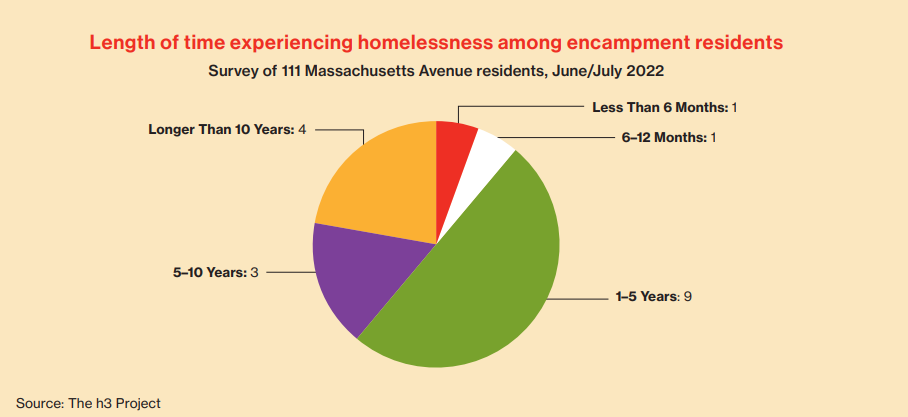
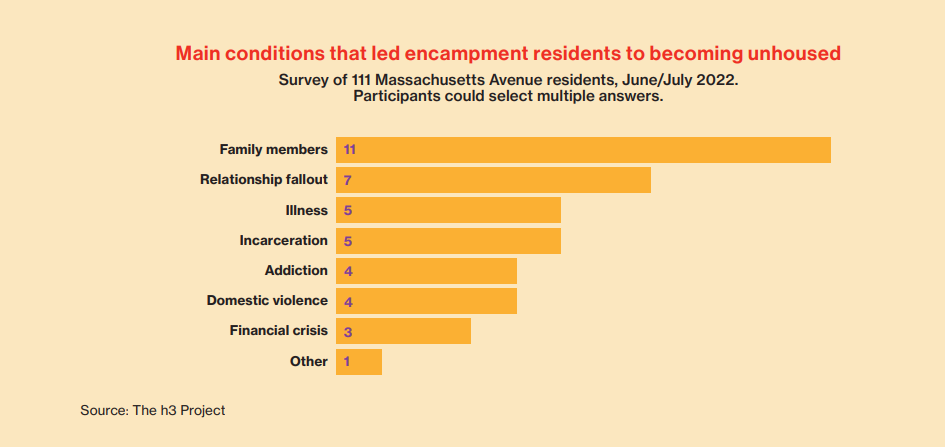
By that time, 21 people experiencing homelessness were living beneath the building’s awnings and around the future construction site. Most had arrived during the preceding 12 weeks. As Georgetown prepared to begin construction, University leaders sought a more ethical and dignified approach than simply displacing the encampment without sustained support.
Through a referral facilitated by MVT CID, Georgetown engaged The h3 Project to conduct intensive outreach before the District cleared the encampment. h3 spent June and July building relationships, surveying residents about their circumstances and needs, and connecting them with housing, health care, employment assistance, public benefits, and other services. After the encampment was cleared on August 12, 2022, h3 continued providing individualized case management.
Of the 21 residents, 18 participated in the survey and outreach process. h3 helped individuals obtain birth certificates and identification, enroll in Medicaid and food-assistance programs, prepare résumés, apply for employment, and connect with housing resources. The team made 18 housing referrals, and two people had already been matched with housing by September 2022. Street Sense Media later reported that some participants obtained employment or housing and that h3 remained in contact with several of them years afterward.
This early investment mattered. Encampment closures can scatter residents and make it difficult for outreach workers to maintain contact, follow up on housing placements, or continue time-sensitive applications for health care and public benefits. By beginning outreach before the closure and supporting continued case management afterward, Georgetown and h3 reduced that disruption and created better opportunities for meaningful outcomes.
The partnership received broader attention only after Street Sense Media documented it in April 2026. The article described Georgetown’s direct investment in outreach as an unusual and potentially replicable approach for universities, developers, corporations, and other institutions preparing to redevelop properties occupied by people experiencing homelessness.
Georgetown had not undertaken the initiative for public recognition. As Executive Vice President and Chief Responsible development is not measured only by what is built, but by how a community treats the people who were there before construction began. Operating Officer Dave Green explained: “We should be doing this every day, without the fanfare. We’re supposed to be doing this.”
The initiative succeeded because each partner contributed something essential. MVT CID understood the neighborhood and connected the right organizations. Georgetown provided the resources and made dignity central to its development process. The h3 Project supplied the expertise, trust, and sustained engagement required to support people through a moment of significant change.
Together, the partners demonstrated a model of human-first homelessness outreach that can be replicated throughout the real estate development sector: engage early, invest in qualified outreach, allow time for trust to develop, continue support after a site is cleared, and recognize the humanity of everyone affected by development.
Responsible development is not measured only by what is built.
It is also measured by how a community treats the people who were there before construction began.
Related News
 September 5, 2024 September 5 Triangle Times
 March 17, 2021 Last Call to View Three HEMPHILL Art Exhibitions
 May 1, 2025 Celebrate Cinco de Mayo in MVT!